
Last updated October 17, 2026
 Metal roofing
 Architectural shingles
 Tile roofing
 GAF
GAF Owens Corning
 Flat & low-slope
Free roof inspection with deck photos before we talk money - GAF and Owens Corning certified installation
Roofing Permits, Codes & Inspections in FL: What You Need to Know
A permit-free roof replacement might save you $500 in fees and a few days of scheduling. It can also void your homeowner’s insurance policy entirely, because Florida insurers are legally permitted to deny hurricane claims on any structural improvement made without a required permit. Most contractors won’t tell you this. In Orlando, where wind-driven rain and 100-plus mph gusts are a real seasonal threat, the permit is the only document that proves a licensed inspector, not just the crew that took your check, verified the roof can take the hit. This guide walks through exactly what Florida law requires, what Orange County enforces, what the 25% re-roof rule means for your wallet, and how to protect yourself from the two most expensive roofing mistakes: unpermitted work and open permits. For a deeper dive, see our Complete Guide to Roofing in Orlando.
Styles & brands we work with
Quick Answer
In Florida, any roof replacement, most structural repairs, and any repair covering more than 25% of the roof area within a 12-month period requires a building permit pulled by a licensed contractor. Minor repairs like replacing a few shingles or resealing flashing typically don’t require a permit, but the exact line depends on square footage and the scope of work, not just the price. In Orlando, permits flow through Orange County’s Building Division, and a final inspection is mandatory before the permit can be closed. Skipping any of this can void your insurance coverage and create a title problem when you sell.
Table of Contents
- When a Florida Roofing Permit Is Required (and When It’s Not)
- How Orange County’s Roofing Permit Process Actually Works
- The 25% Re-Roof Rule: What Triggers a Full Tear-Off
- What a Failed Inspection Means for You and Your Contractor
- Open Permits: The Hidden Problem That Blocks a Home Sale
- What Roofing Permits and Inspections Cost in Orlando
- Contractor-Pulled vs. Owner-Pulled Permits: Who Should Do It
- Common Mistakes to Avoid
- When to Call a Professional
- Frequently Asked Questions
- The Bottom Line
When a Florida Roofing Permit Is Required (and When It’s Not)
Florida Building Code Section 105.1 is blunt: any roofing work that removes and replaces the roof covering, sheathing, or structural decking requires a permit. That means a full re-roof, a tear-off and replacement, or any job where the contractor pulls up decking and nails down new plywood is a permitted job, full stop. There is no “small re-roof” exception.
The confusion comes with repairs. Florida law carves out an exemption for what it calls “minor repairs,” but the definition is narrower than most homeowners assume. Replacing a few missing or damaged shingles after a storm, resealing a pipe boot, or patching a small section of flashing generally falls under the minor repair exemption and does not require a permit, as long as the repair does not involve structural changes to the decking or trusses. The moment the contractor begins removing large sections of underlayment, cutting out decking, or altering the roof structure, the exemption dies and the permit requirement kicks in.
What surprises Orlando homeowners most is that cost has nothing to do with it. A $9,000 repair to replace 200 square feet of decking requires a permit. A $400 repair to replace six shingles probably doesn’t. The line is the scope of work and the square footage involved, not the invoice total.
Here’s the practical test we give homeowners in Orlando: if the contractor is carrying a roll of underlayment up the ladder, ask whether a permit has been pulled. If the answer is no, ask why. If the answer is “you don’t need one for this,” get it in writing and check with Orange County before any work begins.
How Orange County’s Roofing Permit Process Actually Works
In Orlando, roofing permits are issued by the Orange County Division of Building Safety. The process follows a predictable sequence, but the timelines depend heavily on whether the contractor has their paperwork in order. Here’s what the typical flow looks like:
- Application submission. The contractor submits the permit application, the roof plan or product specifications, the Notice of Commencement, and proof of workers’ compensation and liability insurance. An incomplete application is the number one cause of delays.
- Plan review. For a straight re-roof with no structural changes, Orange County usually completes plan review within 3 to 7 business days. Anything involving truss repairs or structural alterations takes longer, sometimes 2 to 3 weeks.
- Permit issuance. Once approved, the permit is issued and the contractor can begin work. The permit card must be displayed on the job site, usually in a front window or attached to the permit box.
- In-progress inspections. For most residential re-roofs, Orange County requires a dry-in inspection after the underlayment is installed but before shingles go on. This verifies that the underlayment is the right type, properly lapped, and correctly fastened.
- Final inspection. After the roof is complete, the contractor schedules the final inspection. An inspector walks the roof, checks the nailing pattern, flashing, drip edge, and overall workmanship, and either passes it or issues a correction notice.
- Permit close-out. Once the final inspection passes, the permit is closed and becomes a permanent record attached to the property. This is the document your insurance company and future buyer will ask for.
In our experience, the biggest scheduling variable in Orlando isn’t the county, it’s the contractor. A contractor who pulls the permit correctly and schedules inspections promptly can complete a standard re-roof in 5 to 10 business days from start to final inspection. A contractor who is slow to schedule the dry-in inspection or who has to reschedule the final because the work wasn’t ready can stretch that to three weeks or more.
One Orlando-specific detail worth knowing: Orange County inspectors are strict about drip edge. Florida Building Code requires drip edge on eaves and rakes, and missing or improperly fastened drip edge is one of the most common reasons for a failed final inspection in this market.
The 25% Re-Roof Rule: What Triggers a Full Tear-Off
Florida Building Code’s Existing Building section contains a provision that every Orlando homeowner should understand before they sign a repair contract: the 25% re-roof rule. Here’s the direct answer: if the total area of roofing being repaired, replaced, or recovered within any 12-month period exceeds 25% of the total roof area, the entire roof must be brought into full compliance with the current Florida Building Code, which in practice usually means a full tear-off and replacement.
The rule exists because Florida’s wind-load requirements are among the strictest in the country. A roof that was built to 1994 standards may not meet the current 130 mph wind-load requirements for new construction in Orlando. The state’s position is simple: if you’re replacing more than a quarter of the roof, you’re not repairing it, you’re re-roofing it, and the whole thing has to meet the modern standard.
Why does this matter to your wallet? Because a contractor who quotes a repair for 300 square feet on a 1,000 square foot roof is legally required to tell you that the repair crosses the 25% threshold and the entire roof must be brought up to code. That means the $3,000 repair quote becomes a $12,000 re-roof quote. It’s not bait-and-switch. It’s the law.
The smartest thing you can do is ask the contractor to calculate the percentage before you commit to a repair. Any contractor who won’t do that math in writing is not someone you want on your roof. Here’s the quick math: take the total square footage of the roof area being worked on, divide it by the total roof square footage, and multiply by 100. If the answer is more than 25, flag it immediately.
There’s also a nuance most guides miss: the 12-month look-back period. If you had a repair done in March that covered 15% of the roof, and now you need another repair in October that covers 15% more, the two together exceed 25% within the same calendar year. The second repair triggers the full compliance rule. This catches a lot of Orlando homeowners off guard, especially after storm season.
What a Failed Inspection Means for You and Your Contractor
An inspection that fails is not the end of the world, and it’s not automatically a sign that the contractor is bad. Florida inspectors fail roofs for specific, correctable reasons: missing drip edge, improper nailing patterns, underlayment that wasn’t lapped correctly, flashing that was nailed instead of properly secured, or shingles that don’t meet the wind-load rating for the Orlando area’s wind zone.
Here’s the direct answer to who pays: the contractor pays. A properly written roofing contract in Florida makes the contractor responsible for passing inspections, including any corrections required by the inspector. If the contractor installed the roof incorrectly and must tear off and redo a section to pass inspection, that cost is on the contractor, not the homeowner. If you’re asked to pay extra for corrections to work the contractor already did, that’s a red flag.
The timeline impact is usually modest. Most failed inspections are corrected within 2 to 5 business days. The contractor schedules a re-inspection, the inspector returns, and if the corrections are done properly, the permit is closed. What you should never accept is a contractor who says “the inspection doesn’t matter” or “we’ll handle the paperwork later.” A roof that cannot pass a county inspection is a roof that cannot be verified as code-compliant, which means it cannot be verified as safe for the next hurricane.
For Orlando homeowners, here’s a useful habit: ask to see the inspection report. Orange County provides a written record of every inspection, pass or fail, and that record is yours to keep. It’s the paper trail that proves your roof was actually checked by a real inspector with a real badge, not just a crew that said it was fine.
Open Permits: The Hidden Problem That Blocks a Home Sale
An open permit is a permit that was pulled but never closed with a final inspection. In Orlando’s real estate market, an open roofing permit is one of the top three reasons a closing gets delayed or a sale falls apart. Here’s why: title companies search permit records as a standard part of the closing process, and an open permit creates a title defect that most buyers’ lenders will not underwrite.
The problem is astonishingly common. A contractor pulls the permit, does the work, passes the rough inspection, then never schedules the final. The homeowner thinks the job is done because the roof looks done. But the permit sits open in Orange County’s system, sometimes for years, and surfaces only when the owner tries to sell, refinance, or file an insurance claim after a storm.
Verifying that your permit was closed is a five-minute task. In Orlando, you can look up your property on Orange County’s permit search portal, find the roofing permit number, and check the status. “Closed” or “Finaled” means the job is done. “Open” or “Issued” means it’s not. If you find an open permit, call the contractor and ask them to schedule the final inspection. A reputable contractor will do this without argument.
If you’re buying a home in Orlando, check the permit history before you write the offer. Open permits on the roof are a negotiating point, but also a signal that the previous contractor didn’t finish the job. We’ve seen Orlando buyers walk away from homes with open roofing permits simply because the seller couldn’t produce a clean record and the buyer didn’t want to inherit the problem.
This is one of the reasons Mercer Roofing Co Orlando documents permit close-out in writing for every job that requires a permit. When the final inspection passes, we provide the closed permit record to the homeowner. It’s a small thing that saves enormous headaches at closing.
What Roofing Permits and Inspections Cost in Orlando
Roofing permit fees in Orange County are based on the valuation of the work, not a flat rate. For a typical single-family home re-roof in Orlando, the permit fee ranges from $150 to $400 depending on the square footage and the total project valuation. Most residential re-roofs land in the $200 to $300 range for the permit itself. Inspection fees are usually included in the permit fee, so there’s no separate charge for the dry-in or final inspection on a standard job.
Here’s a realistic breakdown for a typical 2,000-square-foot re-roof in Orlando:
- Orange County permit fee: $200 to $350, depending on valuation.
- Notice of Commencement recording fee: $10 to $30, recorded with the county.
- Dry-in inspection: included in the permit fee.
- Final inspection: included in the permit fee.
- Re-inspection after a failed inspection: sometimes a small fee, usually $50 to $75, waived by many contractors as a courtesy if the error was theirs.
Keep in mind these are the county’s fees, not your contractor’s markup. A contractor who says “the permit costs $1,200” is either working on a much larger or more complex project than a standard re-roof, or they’re padding the number. Ask for the permit fee to be listed as a line item on the written quote. You should see the actual county cost, not a mystery number.
For Orlando homeowners comparing quotes, the permit line is a useful honesty check. A reputable contractor has no reason to hide it. A contractor who says “we don’t need a permit for this” on a job that clearly needs one is not saving you money, they’re creating a liability.
Contractor-Pulled vs. Owner-Pulled Permits: Who Should Do It
Florida law allows a homeowner to pull their own building permit for work on their own residence. In Orlando, an owner-builder permit is legal for a re-roof, but it comes with serious implications that most homeowners don’t understand until it’s too late.
The biggest issue is liability. When you pull an owner-builder permit, you become the general contractor in the eyes of Florida law. That means you are legally responsible for the safety of everyone who works on the roof, you are responsible for compliance with Florida Building Code, and you are responsible for all corrections if the work fails inspection. If a worker is injured on your roof under an owner-builder permit and the contractor you hired doesn’t have workers’ compensation, the claim lands on your homeowner’s insurance, or on you personally.
There’s also a practical issue: Orange County’s building officials scrutinize owner-builder permits more carefully, especially on homes that show evidence of recent sale or rental activity. The county knows that some contractors push homeowners to pull owner-builder permits to avoid the licensing and insurance requirements that come with contractor-pulled permits. That arrangement is illegal in Florida, and the county will flag it.
Our recommendation is straightforward: the contractor should pull the permit, every time. A licensed Florida roofing contractor is required by law to pull permits for permitted work, and their license number on the permit is your protection. If something goes wrong, you have a licensed professional on the hook, not a personal liability you didn’t ask for.
If a contractor asks you to pull the permit yourself, that’s a red flag worth walking away from. It usually means the contractor doesn’t have a valid Florida roofing license, doesn’t carry workers’ compensation, or both.
For those who want to understand the risk more fully, here’s a related resource from our Roofing Company in Orlando page that explains how licensing works and why it matters more than the price difference between contractors.
Common Mistakes to Avoid
- Accepting a verbal promise that “no permit is needed.” Contractors who say this are usually wrong, unlicensed, or both. If the scope of work requires a permit under Florida law, no contractor’s opinion overrides the code. Get the answer in writing from Orange County if there’s any doubt.
- Paying in full before the final inspection passes. Once the contractor has 100% of the money, the leverage disappears. A standard payment schedule holds 10% to 20% until the final inspection passes and the permit is closed.
- Treating the 25% rule as optional. The 25% re-roof threshold is not a guideline. A repair that exceeds 25% of the roof area triggers a legal requirement to bring the whole roof to current code. Ignoring it doesn’t save money; it creates an unpermitted roof that voids insurance coverage.
- Hiring a contractor who won’t be on the permit. If the name on the contract doesn’t match the name on the permit application, you’re looking at an unlicensed subcontractor arrangement. In Orlando, that’s a leading cause of abandoned jobs and unpaid supplier liens.
- Never checking the permit status after the roofer leaves. Open permits don’t go away on their own. They sit in Orange County’s system and resurface when you sell. Check the status before you make the final payment.
- Assuming insurance covers unpermitted work. Florida insurers have explicit policy exclusions for structural work done without a required permit. A roof that wasn’t permitted can mean a denied claim after a storm, and that’s the moment homeowners discover the $500 they saved cost them a $30,000 roof.
- Skipping the dry-in inspection. Some contractors push to skip the dry-in and go straight to shingles. The dry-in inspection verifies the underlayment is right before it’s covered up. Once shingles are on, no inspector can see what’s underneath. If your contractor suggests skipping it, find another contractor.
Before you make any of these mistakes, read our Mercer Roofing Co Orlando home page to understand what a properly documented roofing job should look like, start to finish.
When to Call a Professional
Roof permitting is not a do-it-yourself project. If your roof needs replacement, if a repair crosses the 25% threshold, if you’ve discovered an open permit on a home you’re buying or selling, or if a storm has caused damage you can’t fully assess from the ground, the right move is to call a licensed contractor who pulls permits as standard practice, not as an exception. The cost of a licensed, permitted roof is protected by Florida law, enforced by Orange County inspection, and verifiable by the paper trail it creates. The cost of an unpermitted roof is a denied insurance claim, a stalled closing, or a roof that fails the first time a hurricane tests it. Mercer Roofing Co Orlando offers free estimates in Orlando, and every quote includes the permit fee as a line item so you know exactly what the county charges and exactly what you’re paying. Call (850) 757-3564 for a free estimate, or visit our Roof Installation in Orlando page for more on what a full re-roof involves.
Frequently Asked Questions
A typical residential roofing permit in Orlando costs between $200 and $350, based on the valuation of the work and the square footage of the roof. Inspection fees are included in the permit fee for standard re-roofs, so there’s no separate charge for the dry-in or final inspection. Call (850) 757-3564 for an exact quote on your specific roof; the permit fee will be listed as a line item on the written estimate.
No. Florida Building Code requires a permit for any roof replacement, including a DIY re-roof. Florida does allow an owner-builder permit for work on your own residence, but that comes with full legal responsibility for the safety of everyone on the job, compliance with code, and all corrections from failed inspections. In our experience, the savings from a DIY re-roof rarely survives the first failed inspection.
The 25% rule is a provision of the Florida Building Code that requires a full roof replacement, brought up to current code, when repairs exceed 25% of the total roof area within any 12-month period. It exists to ensure that roofs meeting current wind-load requirements are installed where significant portions of the roof are being replaced. Call (850) 757-3564 and we can help you calculate whether your repair crosses the threshold before you sign anything.
Replacing a small number of damaged or missing shingles generally does not require a permit, as long as the repair is minor, does not involve structural changes, and does not require removing large sections of underlayment or decking. However, any repair that removes and replaces the roof covering on more than 25% of the roof area does require a permit and triggers the full re-roof requirement.
For a straightforward residential re-roof with no structural changes, Orange County typically completes plan review within 3 to 7 business days. The full process from application to final inspection usually takes 5 to 10 business days, assuming the contractor schedules inspections promptly and the work is ready when the inspector arrives. More complex projects with structural repairs can take 2 to 3 weeks or longer.
Florida insurers have explicit policy exclusions for structural improvements made without a required permit. If you file a hurricane claim on a roof that was replaced or significantly repaired without a permit, the insurer can deny the claim, cancel the policy, or both. This is the single most expensive permitting mistake a homeowner can make, and it’s one we see play out in Orlando after every major storm season.
For more on what a properly permitted repair looks like from the contractor’s side, see our Roof Repair in Orlando page.
The Bottom Line
Florida’s roofing permit requirements exist for one reason: to make sure someone with the legal authority to inspect your roof has actually done so before a 130 mph wind load tests it. The permit is your proof that the underlayment was installed right, the flashing is sound, and the roof meets the current code, not the code from 1994. The permit fee is a rounding error compared to the cost of an unpermitted roof: denied insurance claims, stalled closings, and a roof that fails when you need it most. If you’re in Orlando and you want a roof that’s permitted, inspected, and documented from day one, Mercer Roofing Co Orlando provides written pricing, pulled permits as standard practice, and a written guarantee on every repair. Explore more guides & resources on our blog. Call (850) 757-3564 for a free estimate.
Written by Grant Whitlock, Owner at Mercer Roofing Co Orlando, serving Orlando since 2000.
See the difference
 Before
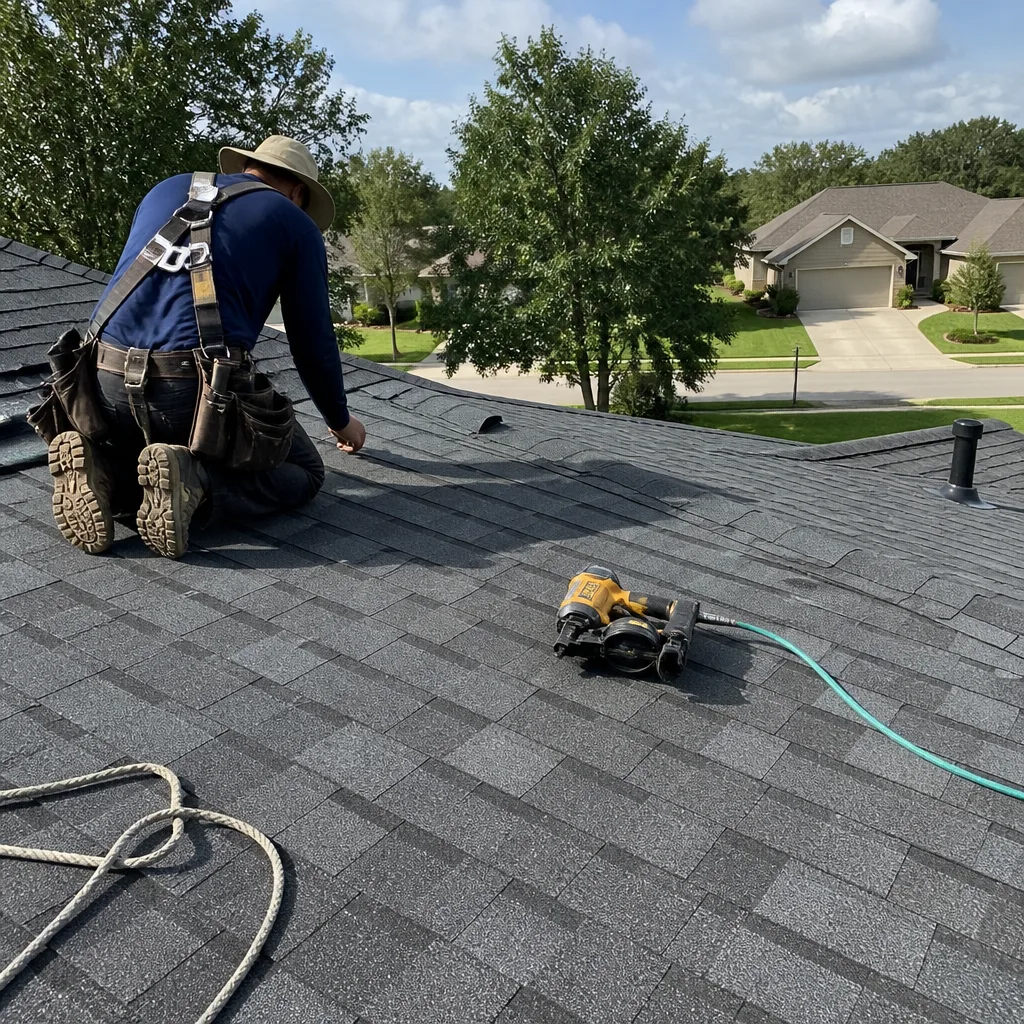
 After
After Before
 After
After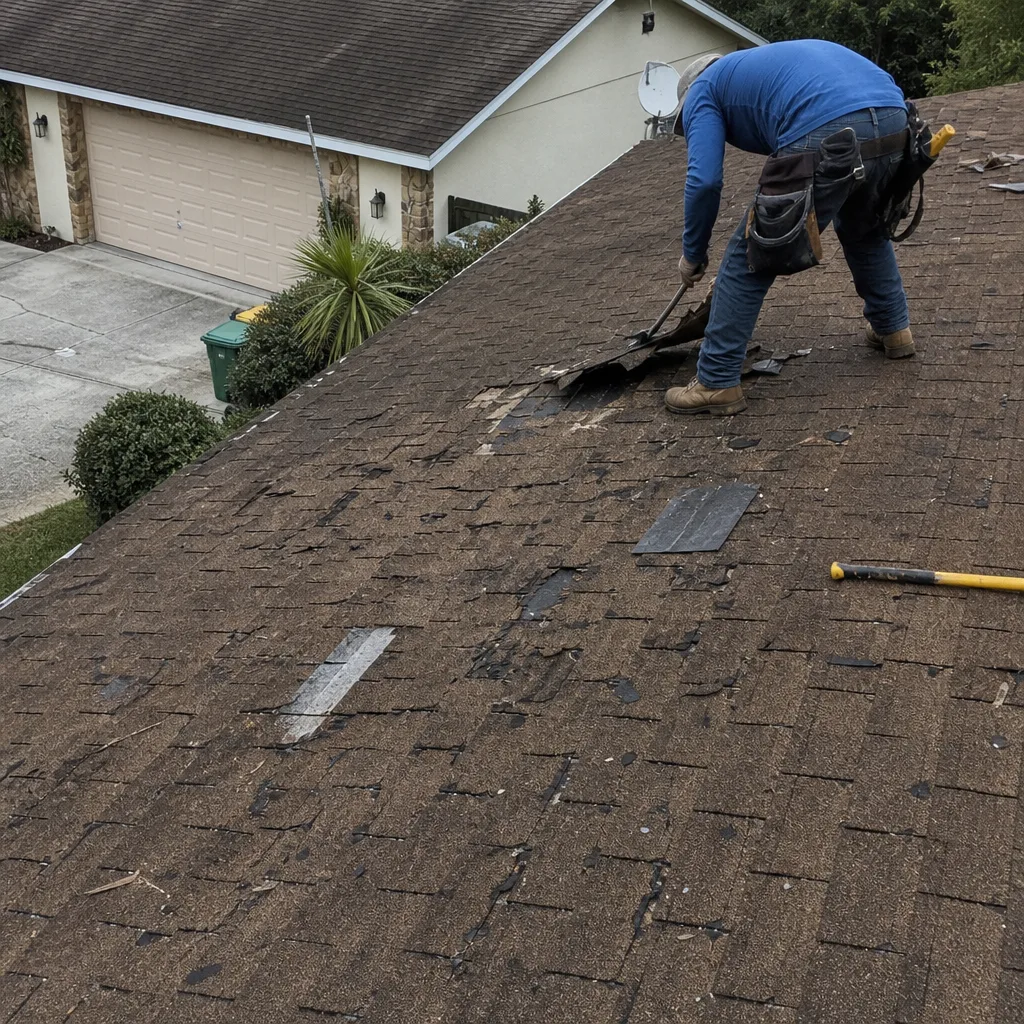 Before
 After
After