
Last updated October 17, 2026
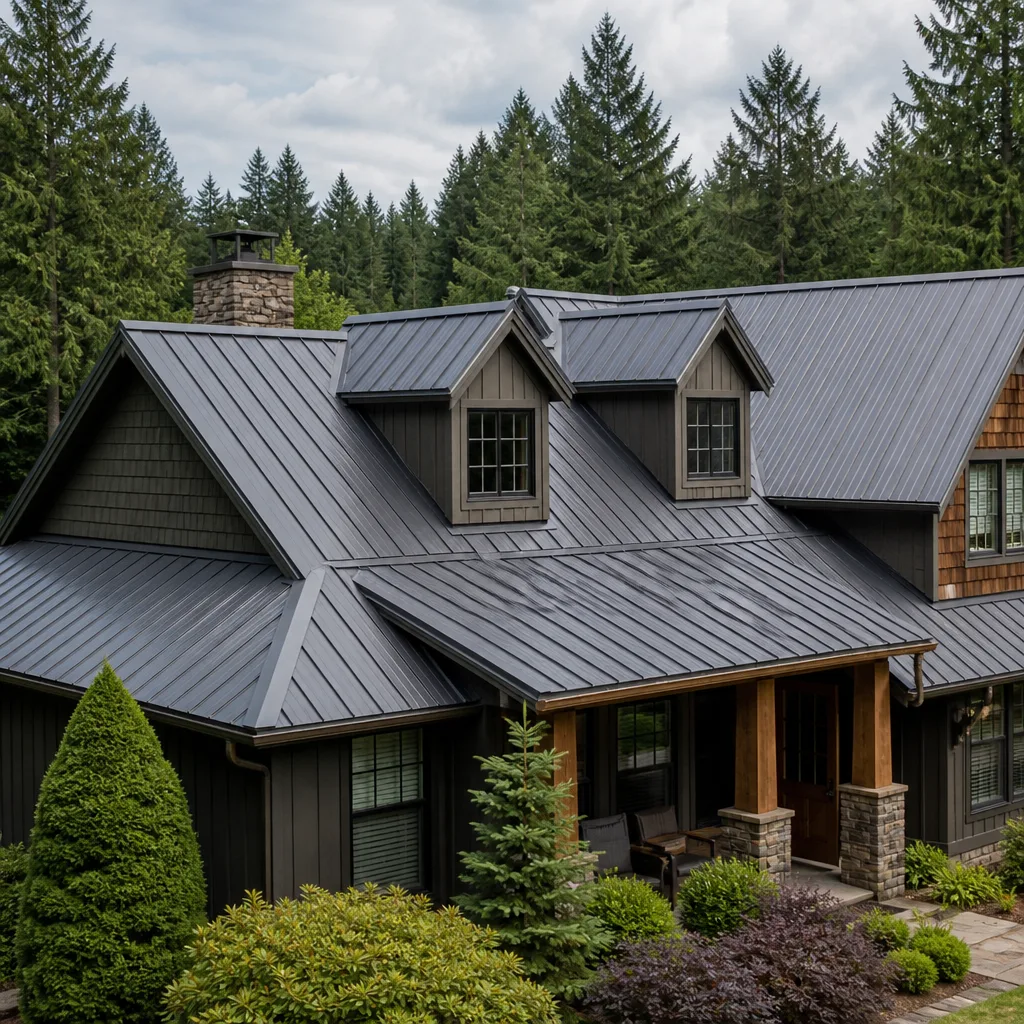 Metal roofing
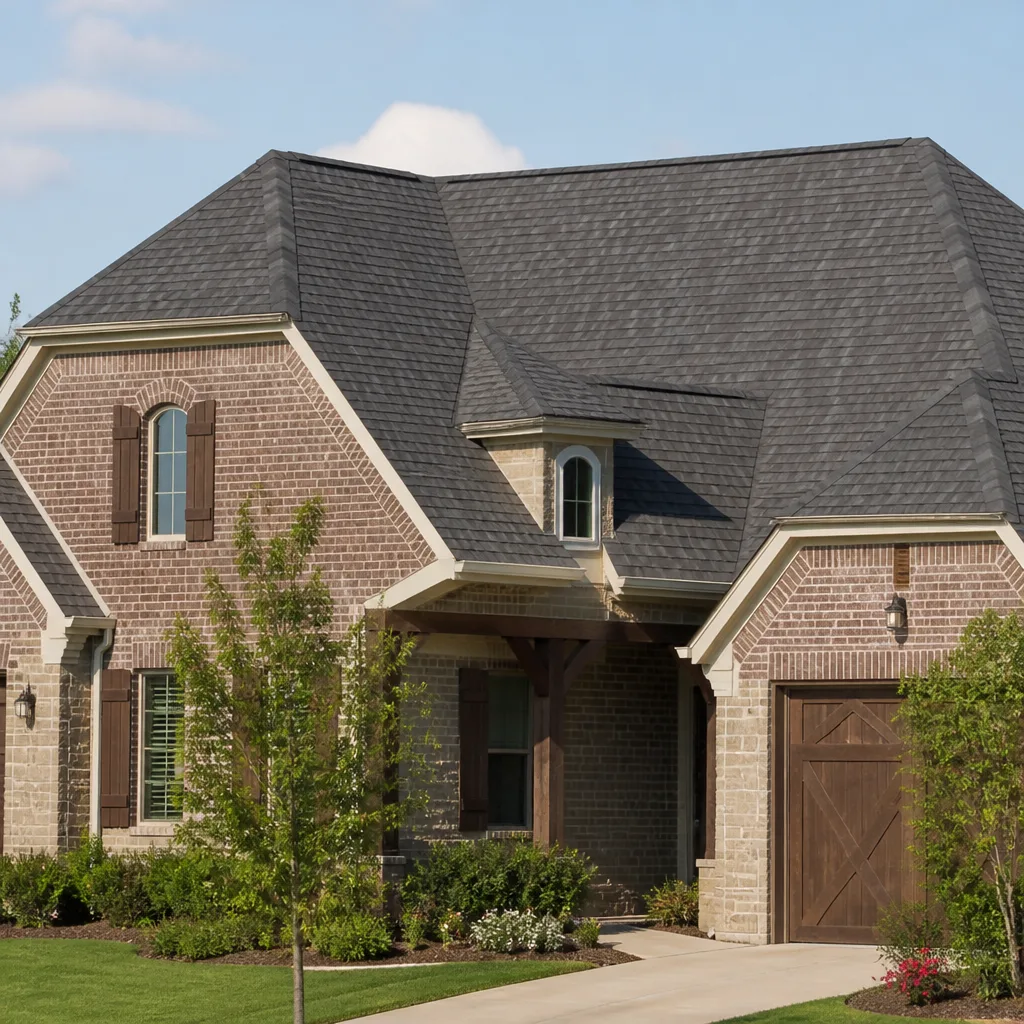 Architectural shingles
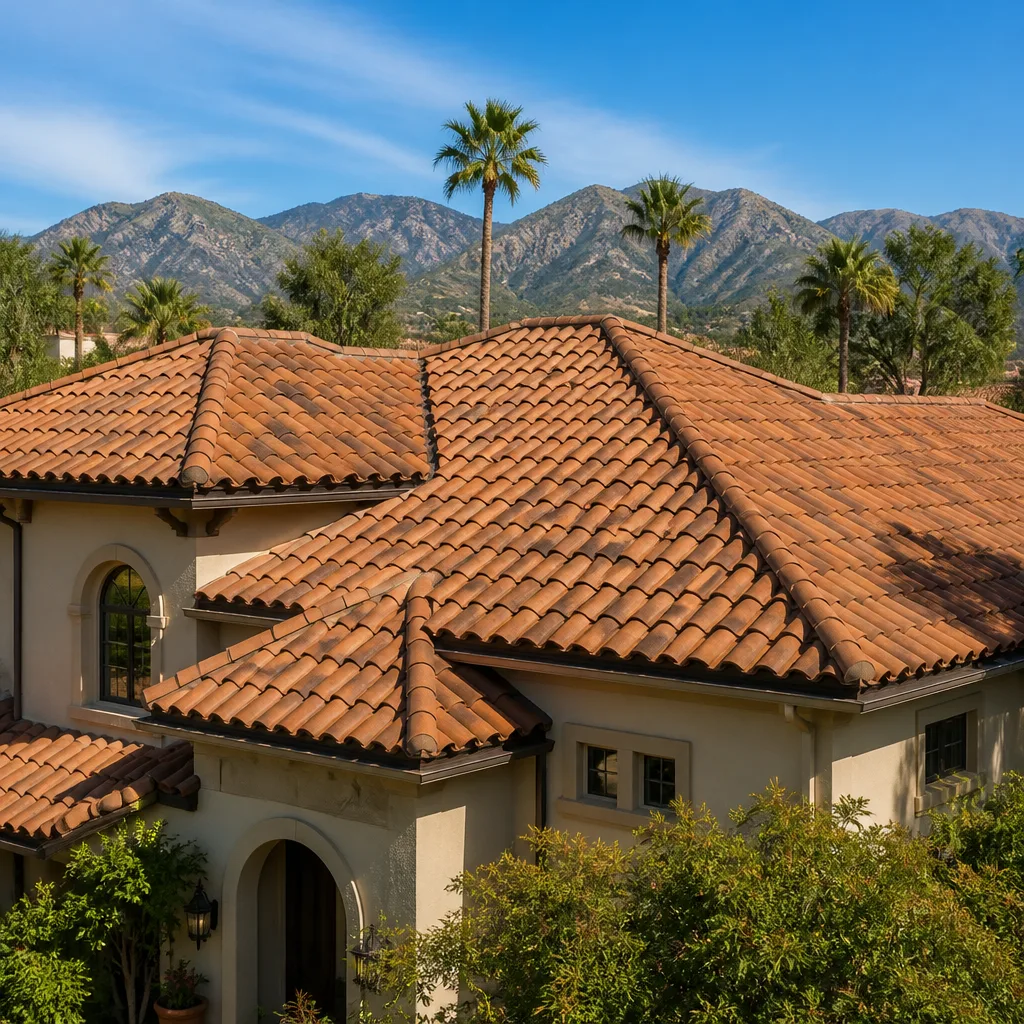 Tile roofing
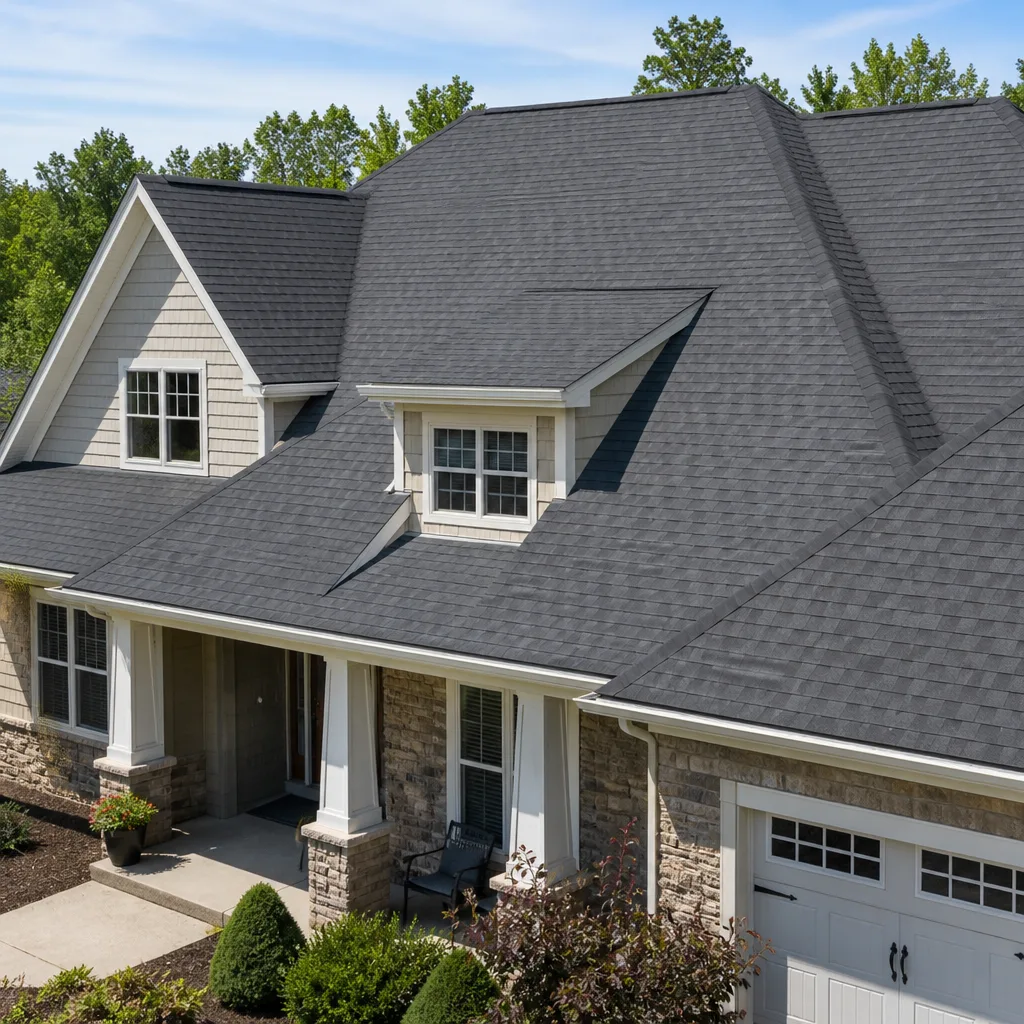 GAF
GAF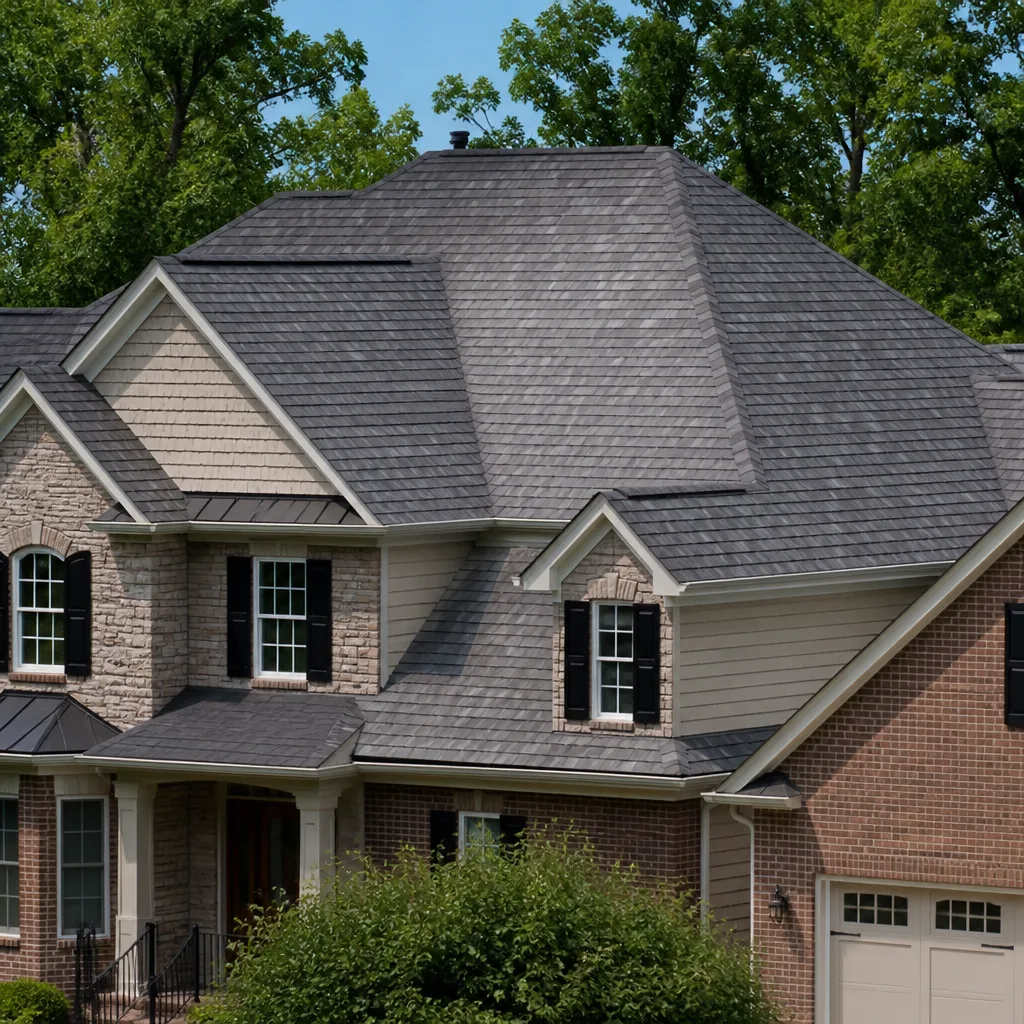 Owens Corning
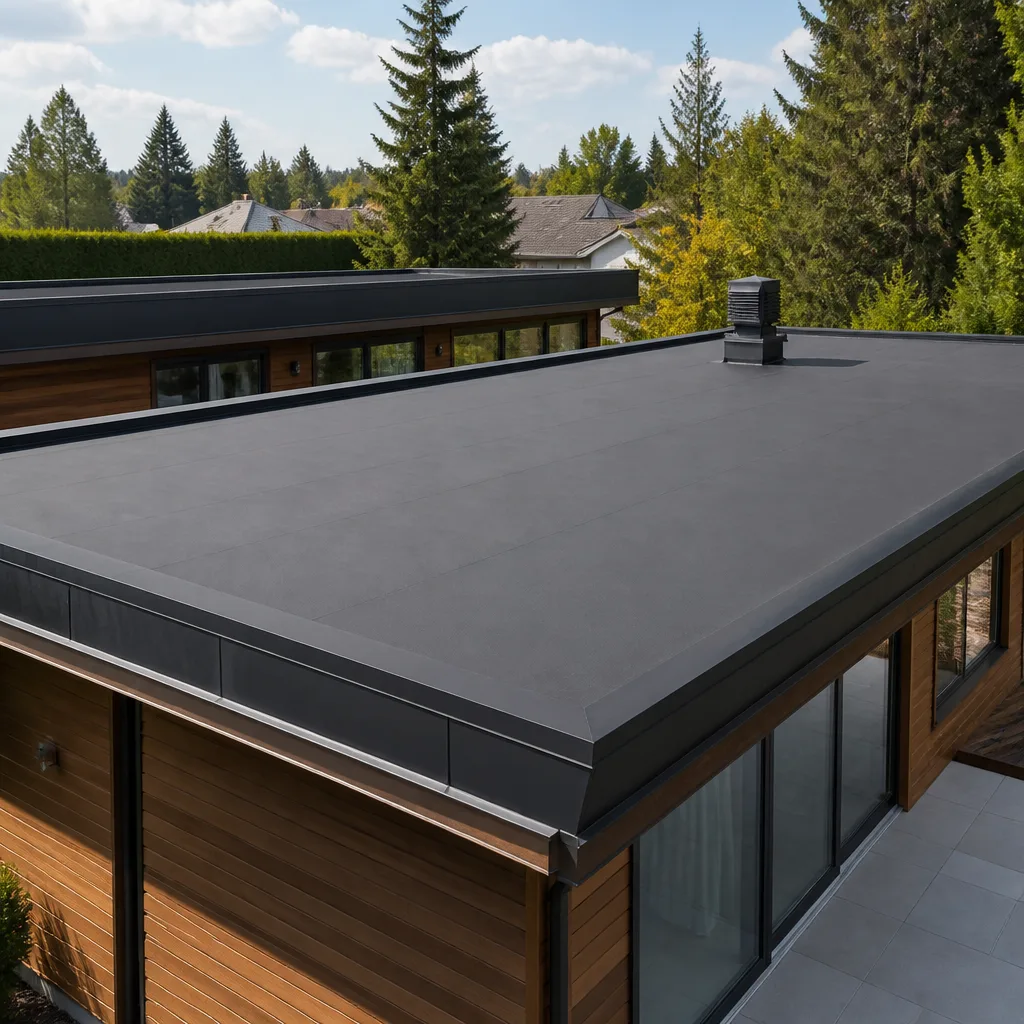 Flat & low-slope
Free roof inspection with deck photos before we talk money - GAF and Owens Corning certified installation
How to Hire a Roofing Contractor in Orlando: A Step-by-Step Guide
After Hurricane Ian tore through Florida, the state’s Department of Business and Professional Regulation logged hundreds of roofing complaints in a single month. The detail that kept repeating: homeowners said the contractor “seemed professional” and drove a truck with a logo. A logo is not a license. A handshake is not a guarantee. And in Orlando, where summer thunderstorms roll through nearly every afternoon between June and September, the pressure to fix a roof fast gets exploited by people who know exactly how to look legitimate long enough to collect a deposit. This guide walks you through a repeatable vetting process that filters out the chasers before they ever reach your driveway, and you can find more guides & resources on our blog.
Quick Answer
To hire a roofing contractor in Orlando, verify their Florida DBPR license is active, confirm their insurance directly with the carrier, get a written estimate with five specific line items, cap your deposit at 10-30%, and ask for the technician’s name and photo before the visit. A company that resists any of these steps is signaling something important, and it’s rarely good. Follow the process below and you’ll eliminate most of the risk before a single nail gets driven.
Styles & brands we work with
Table of Contents
- Step 1: Verify the Florida Roofing License on DBPR (60 Seconds)
- Step 2: Verify the Certificate of Insurance With the Carrier
- Step 3: Get a Written Estimate With These 5 Line Items
- Step 4: Understand the Deposit Structure That Protects You
- Step 5: Ask Who’s Coming to Your Door
- Step 6: Know What Orlando’s Climate Does to Roofs
- Step 7: Understand the Shingle Brands That Matter in Florida
- Red Flags: When to Walk Away Immediately
Step 1: Verify the Florida Roofing License on DBPR (60 Seconds)
Every legitimate roofing contractor in Florida must hold a license issued by the Department of Business and Professional Regulation, or DBPR. You can check it online at myfloridalicense.com in under a minute. Here’s the process, step by step.
- Go to myfloridalicense.com and click “Verify a License.”
- Enter the contractor’s name or license number. If you don’t have the number, search by name.
- Confirm the license type says “Certified Roofing Contractor” or “Registered Roofing Contractor.” A general contractor license is not the same thing.
- Check the status. It must say “Active.” If it says “Delinquent,” “Inactive,” or “Revoked,” stop right there.
- Note the license expiration date. It should be in the future.
Here’s what those statuses mean in plain English. “Active” means the contractor has met the state’s continuing education and insurance requirements. “Delinquent” often means they failed to maintain their insurance or update required paperwork, which means if something goes wrong on your roof, you may have no state-level recourse. “Inactive” can mean they’re not currently operating lawfully at all. We’ve had Orlando homeowners in neighborhoods like College Park and Conway call us after a “roofer” with a delinquent license took a deposit and vanished. In nearly every case, the homeowner never ran the DBPR check because the person at the door seemed confident and had a clipboard.
One more thing: verify the name on the license matches the name on the contract. A common trick is for a chaser to use a real company’s license number with a different name on the paperwork. If the names don’t match, walk away.
Step 2: Verify the Certificate of Insurance With the Carrier
A PDF of a Certificate of Insurance, or COI, means almost nothing by itself. Anyone with basic computer skills can alter a PDF in five minutes. What matters is whether the policy is actually active. Here’s how to verify it.
- Ask the contractor for their COI. It should list the insurance carrier’s name, the policy number, and the coverage amounts.
- Call the carrier directly. Do not call the phone number on the COI, which could route to an accomplice. Look up the insurance company’s main claims or policy verification line yourself.
- Give the carrier the policy number and the contractor’s business name, and ask three questions: Is this policy currently active? What are the general liability limits? Does it include workers’ compensation coverage?
- Ask the carrier to email you a confirmation, or note the date, time, and name of the representative you spoke with.
In Orlando, general liability coverage of at least $1 million is standard for reputable roofing companies. Workers’ compensation is non-negotiable in Florida: if a roofer falls off your roof and the company doesn’t carry workers’ comp, the injury claim can land on your homeowner’s insurance. That’s not a theoretical risk. Roofing has one of the highest fall rates of any trade in the country.
We carry both, and we’ll provide the carrier’s direct verification number if you ask. Any company that hesitates or gets defensive about insurance verification is telling you something useful.
Step 3: Get a Written Estimate With These 5 Line Items
A verbal quote is not an estimate. In Florida’s roofing market, where storm damage drives a high volume of urgent repairs, a written line-item estimate is the single best protection against price inflation after work begins. For a complete list of what to review, see our Roof Repair Maintenance Checklist for Orlando Homeowners. Here are the five things that must appear, in writing, before you sign anything.
- Total project cost, broken into line items. This means materials, labor, disposal, permits, and any subcontractor costs listed separately. Not one lump sum.
- Specific materials, by brand and product line. “Architectural shingle” is vague. “GAF Timberline HDZ, color: Charcoal” is specific. The same goes for underlayment, flashing, and ridge vents.
- Scope of work in plain English. What exactly gets torn off? What gets replaced? What gets inspected but left alone? If the decking is rotted (common in Orlando’s humid climate), what’s the per-sheet replacement cost?
- Payment schedule. When is the deposit due? When are progress payments due? When is the final payment due, and what triggers it?
- Warranty terms, in writing. This includes the manufacturer’s warranty on materials and the contractor’s workmanship warranty. How long does each last? What does each cover? What voids them?
Two things should make you walk away immediately. The first is a contractor who won’t put the price in writing at all. The second is a contract that says something vague like “additional work as needed, billed at prevailing rates.” That’s a blank check. At Mercer Roofing, every project starts with a written price and no work begins without one. That’s not a sales tactic; it’s the only way to hold anyone accountable.
Step 4: Understand the Deposit Structure That Protects You
A deposit on a roofing job is normal. What’s not normal is a deposit so large that the contractor has no incentive to finish the work. The rule of thumb in Orlando: 10% to 30% is reasonable, depending on the job size and whether special-order materials are involved. Fifty percent or more is a red flag, especially when paired with urgency language about “storm pricing” or “limited material availability.”
The “storm damage urgency” lever is the most common one used to rush homeowners past due diligence. Here’s how it works. A chaser knocks on doors after a big Orlando thunderstorm, points at granule loss in your gutter, and says your roof is compromised. Then they say they can start tomorrow if you sign today and put down a deposit, usually 50% or the full cost. The pressure works because the homeowner is looking at water stains on the ceiling and imagining the worst.
What actually protects you: a written estimate, verified license and insurance, and a deposit you can afford to lose. If a contractor balks at 10-30%, they’re telling you they needed the full amount to pay for materials because they have no credit or no established supplier relationships. That’s their problem, not yours. Get the estimate in writing, sleep on it, and call the people who didn’t rush you.
Step 5: Ask Who’s Coming to Your Door
Here’s a question that separates the careful companies from the transactional ones: “Can you send me the name and photo of the technician who will be at my house, before they arrive?”
A company that does this has nothing to hide and a process to manage quality. A company that resists, dismisses the question, or says “we’ll see who’s available” is signaling something important. They’re signaling that they don’t know who will show up at your door, which means you won’t either.
This matters more in Orlando than it might elsewhere. Our market has a high concentration of retirees, single parents, and people who work from home. They open the door to a stranger because a roofing issue feels urgent. At Mercer Roofing, every technician’s name and photo is sent to the homeowner before the visit. When the technician arrives, they’re uniformed, background-checked, and carrying a photo ID badge that matches the person in the photo you received. This is the Threshold Verified standard, and every independently owned location under the Threshold Group umbrella is contractually held to it. We’re part of that group, founded in 2000, and our technicians are identity-verified before they ever knock on a door.
If a company can’t tell you who’s coming, don’t open the door for anyone you didn’t screen.
Step 6: Know What Orlando’s Climate Does to Roofs
Orlando is not Miami. The differences matter for your roof. We don’t get direct hurricane hits every season, but we get something almost as damaging: daily afternoon thunderstorms from June through September. The heat expands your shingles and underlayment during the day, then a sudden downpour cools them fast. That thermal shock, repeated hundreds of times over a few summers, is one of the main reasons Orlando roofs fail earlier than the manufacturer’s wind rating suggests.
Humidity is the quiet second risk. Attic ventilation in Orlando is a code requirement for a reason. A poorly ventilated attic traps moisture, which rots decking from the inside, warps framing, and invites mold. We’ve pulled off shingles in neighborhoods like Baldwin Park and Winter Park and found decking so soft you could push a screwdriver through it, all because a previous roofer didn’t install the right ridge vent or soffit baffles.
Local code also matters. Orange County and the City of Orlando follow the Florida Building Code, which has stricter wind-load and underlayment requirements than most of the country. A roofer from out of state who’s “just passing through for storm work” may quote you a price based on code they know from Georgia or Alabama. For help understanding what drives pricing in this market, see our Roofing Cost Breakdown: The Orlando Homeowner’s Reference for 2026. That quote will be lower, and the roof will be wrong. When you verify a license on DBPR, you’re also verifying that the contractor has passed Florida-specific exams and knows Florida-specific code.
Step 7: Understand the Shingle Brands That Matter in Florida
You don’t need to be a materials expert to make a good decision, but you do need to recognize the names that matter. CertainTeed, Owens Corning, and IKO are three manufacturers whose shingles are widely recognized and backed by substantial warranties. Each makes product lines suited to Florida’s wind and heat, and each has specific installation requirements that affect the warranty.
Here’s what’s worth knowing: a shingle warranty is only as good as the installation. Manufacturers like CertainTeed and Owens Corning offer enhanced warranties, sometimes called “system” warranties, that require the contractor to install a specific combination of underlayment, shingles, and ridge vents to the manufacturer’s specification. If the contractor substitutes a cheaper underlayment, the warranty on the shingles can be reduced or voided. This is another reason the written estimate matters. It should list not just the shingle brand, but the underlayment brand and the ventilation product.
At Mercer Roofing, we install and repair using manufacturer-recognized shingle brands including GAF, CertainTeed, Owens Corning, IKO, Atlas, Tamko, and Boral. The brand choice depends on the home’s architectural style, the roof’s pitch, and the homeowner’s budget. We’ll explain the trade-offs in plain English, because a shingle is not just a shingle, and in Orlando’s climate, an under-ventilated roof with premium shingles will still fail before a properly vented roof with mid-range shingles.
Red Flags: When to Walk Away Immediately
Some situations don’t deserve further investigation. If you see these, end the conversation.
- A contractor who knocks on your door unsolicited after a storm. Legitimate Orlando roofing companies are busy after storms, but they don’t go door-to-door with a ladder. Chasers do.
- No written estimate, or the estimate is one number on a business card. No line items, no scope, no protection.
- A deposit over 50%, or “full payment today to lock in pricing.” Once they have your money, their incentive to show up drops to zero.
- Insurance verification resistance. A PDF is not verification. If they won’t let you call the carrier, assume the policy doesn’t exist.
- License status anything other than Active. Delinquent, inactive, revoked, or expired means the contractor is not legally operating in Florida.
- A contractor who won’t tell you who’s coming to your house. If they don’t know, you won’t either. And you’re the one opening the door.
Common Mistakes to Avoid
- Trusting a truck wrap. A logo on a pickup costs $500. A Florida roofing license costs years of testing and continuing education. They are not equivalent.
- Signing under time pressure. “This price is only good today” is a manipulation, not a market condition. Orlando’s roofing supply chain is stable enough that a legitimate contractor can hold a price for at least two weeks.
- Skipping the insurance verification phone call. Accepting a COI PDF without calling the carrier is the single most common mistake we see, and the consequences can land on your homeowners insurance.
- Paying for the entire job upfront. A reasonable deposit protects the contractor’s material costs. Full payment upfront protects nothing except the contractor’s disappearance.
- Ignoring attic ventilation. In Orlando’s humidity, a roof without proper ventilation fails from the inside out. A roofer who doesn’t discuss ventilation isn’t looking at the whole roof.
- Hiring the lowest bidder without running the process. The lowest bid is often a licensed roofer with bare-minimum scope, or an unlicensed one with no overhead. The process in this guide exists to tell them apart.
- Not asking who’s coming to the door. You vet the company. You should vet the person standing on your welcome mat too.
See the difference
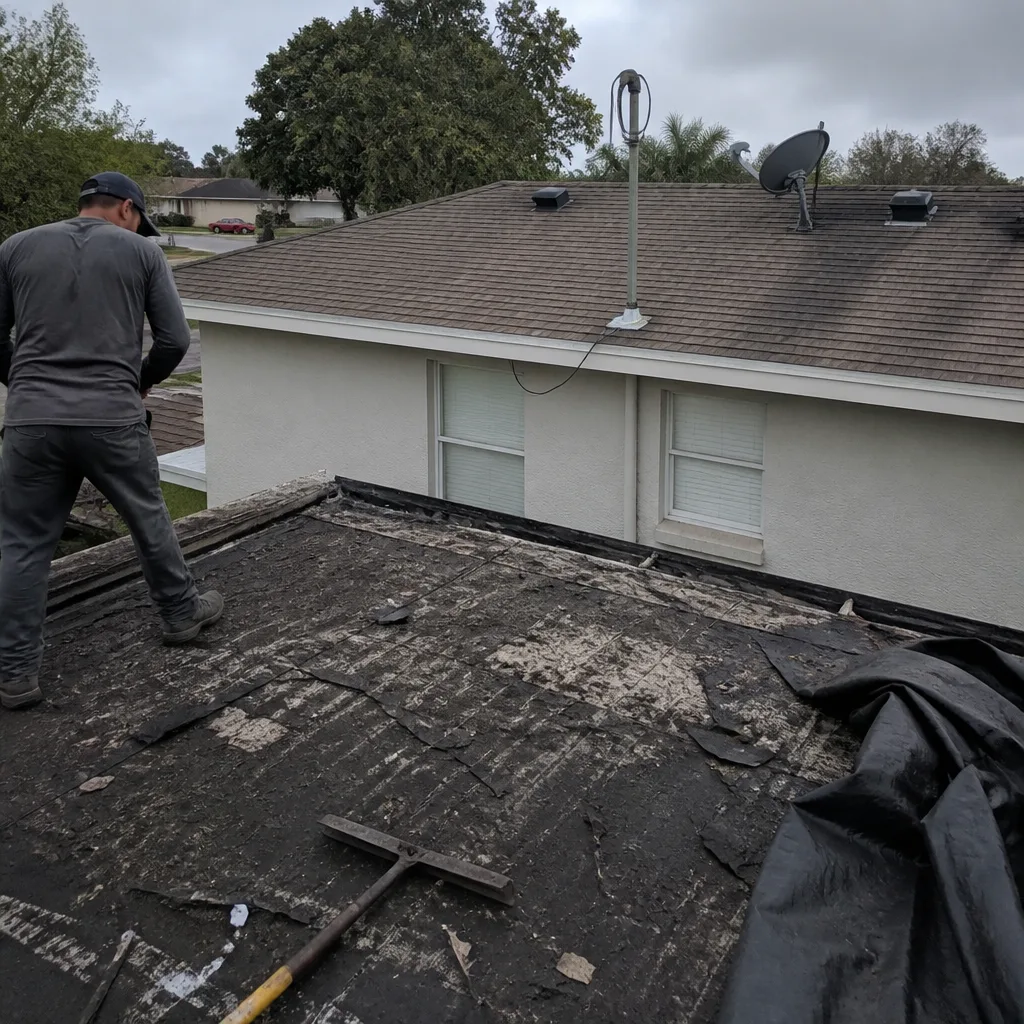 Before
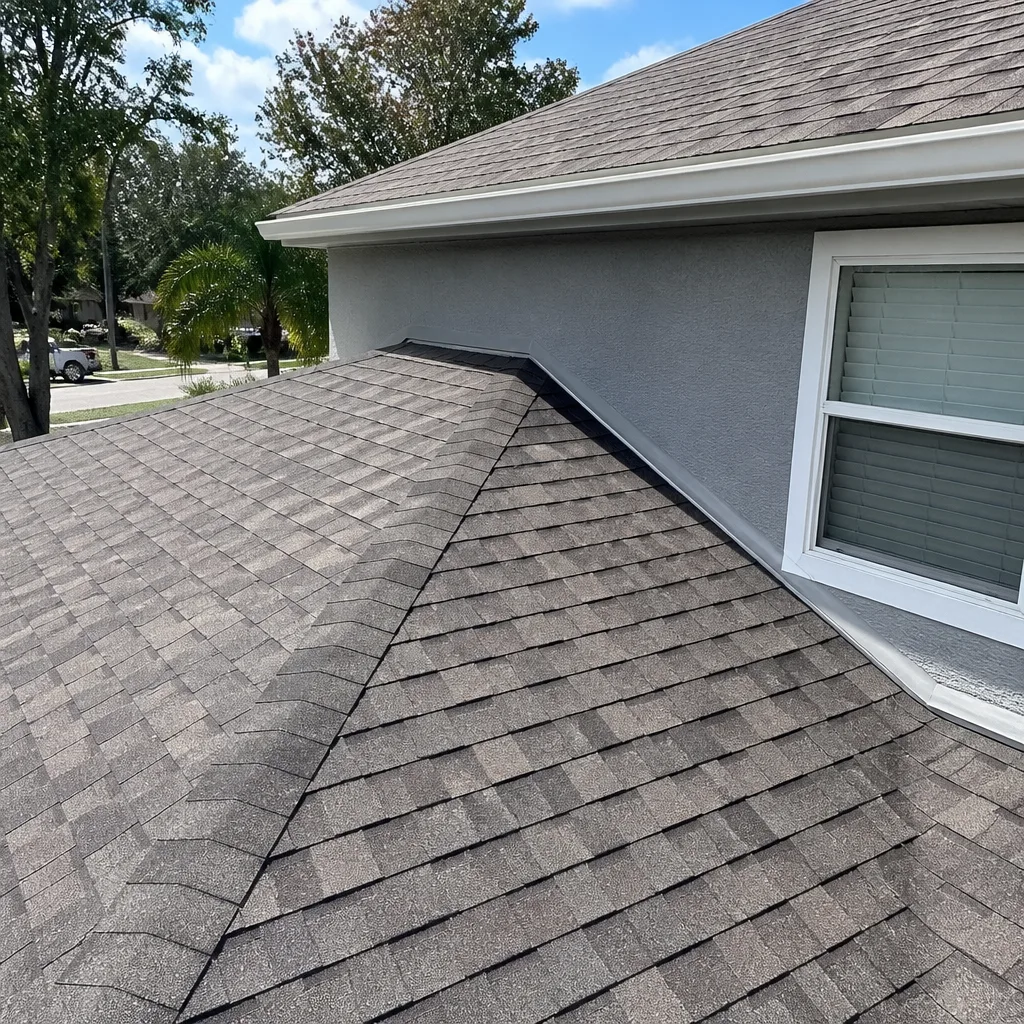 After
After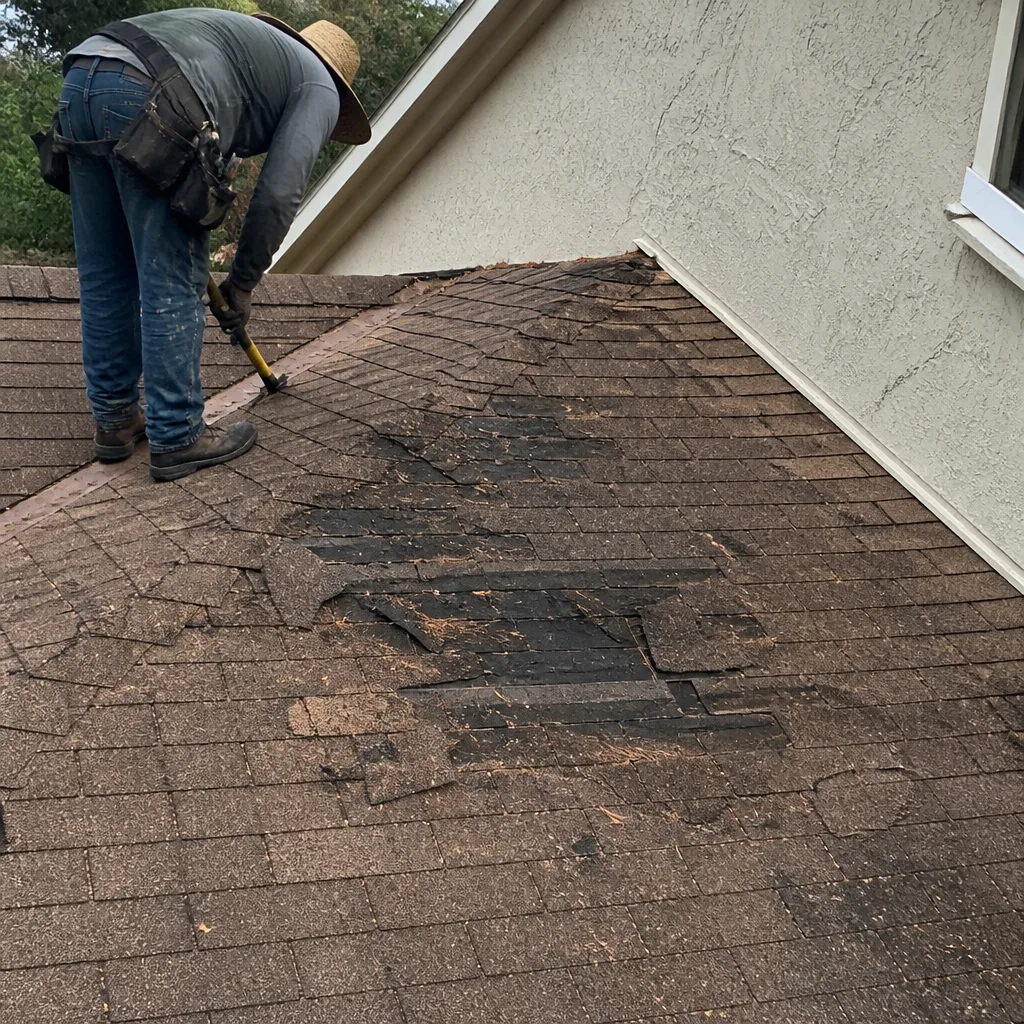 Before
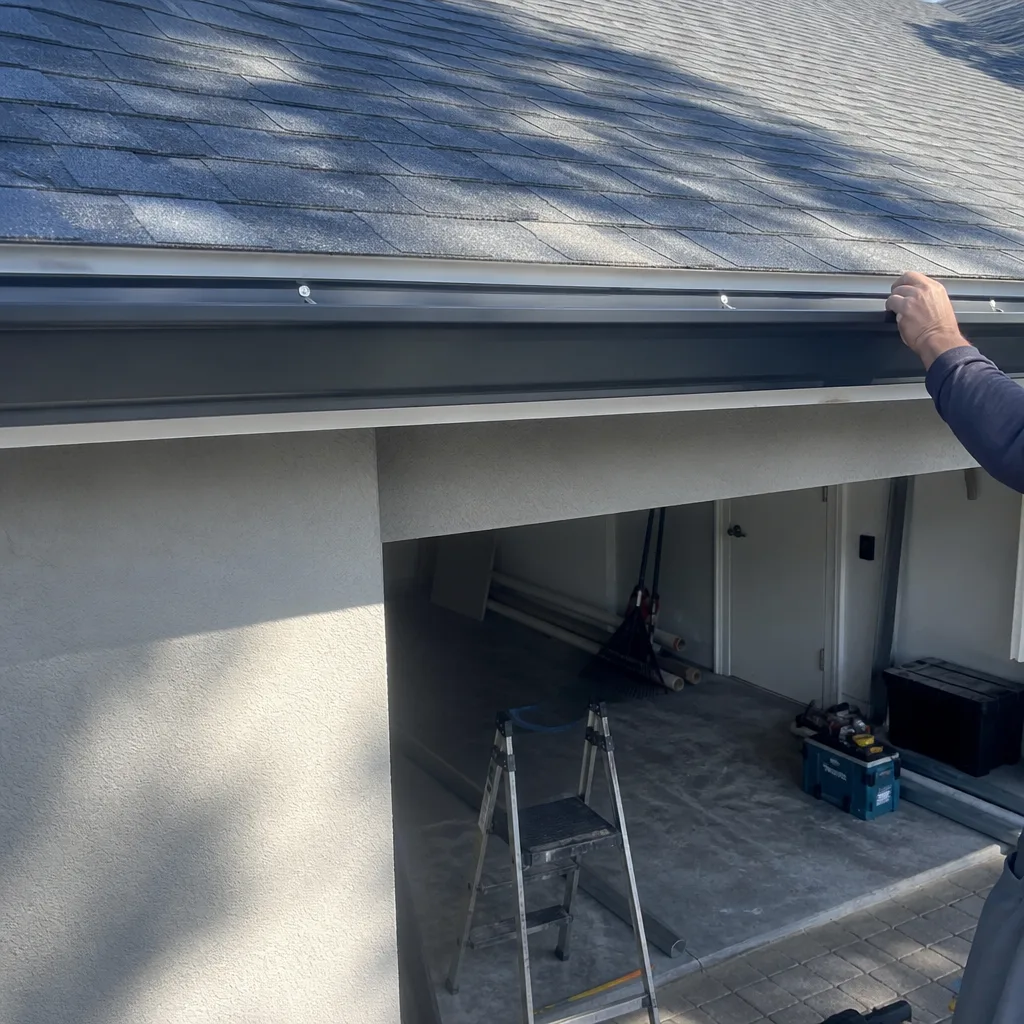 After
After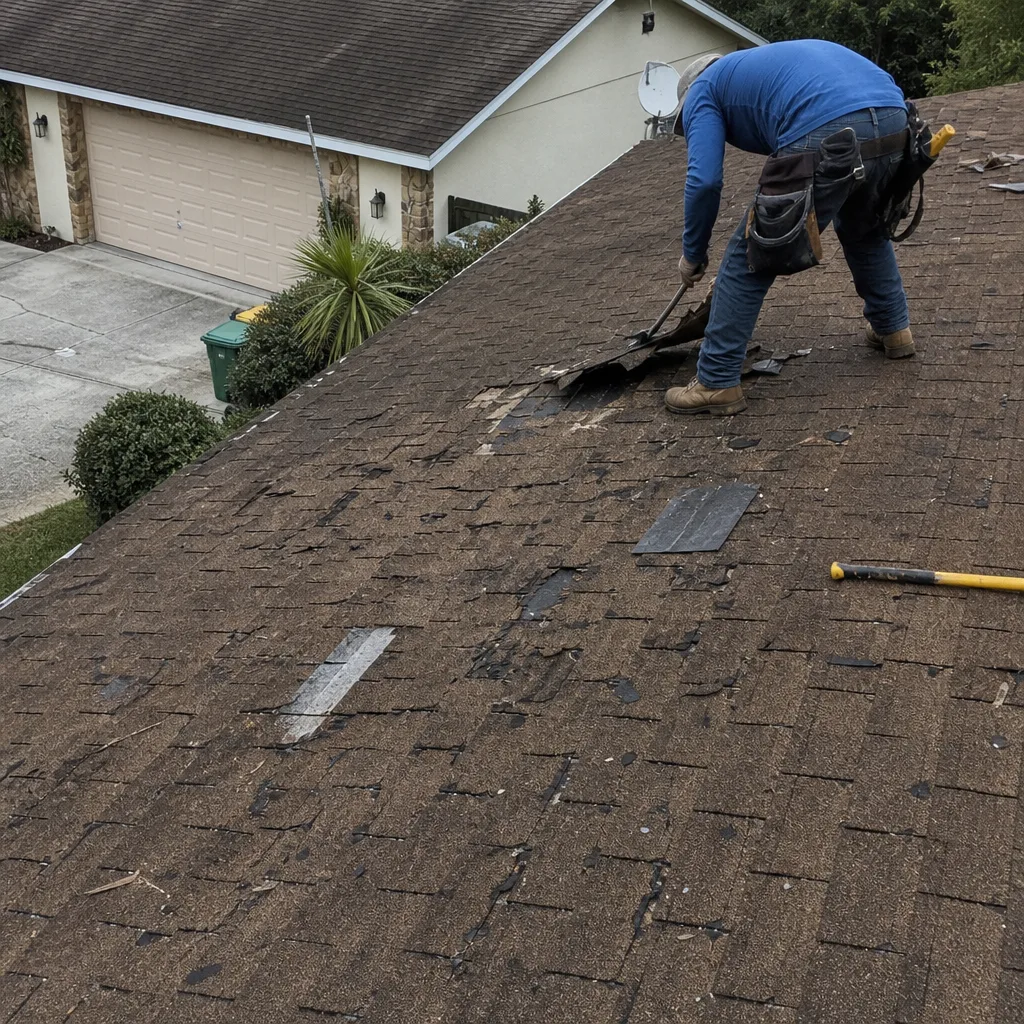 Before
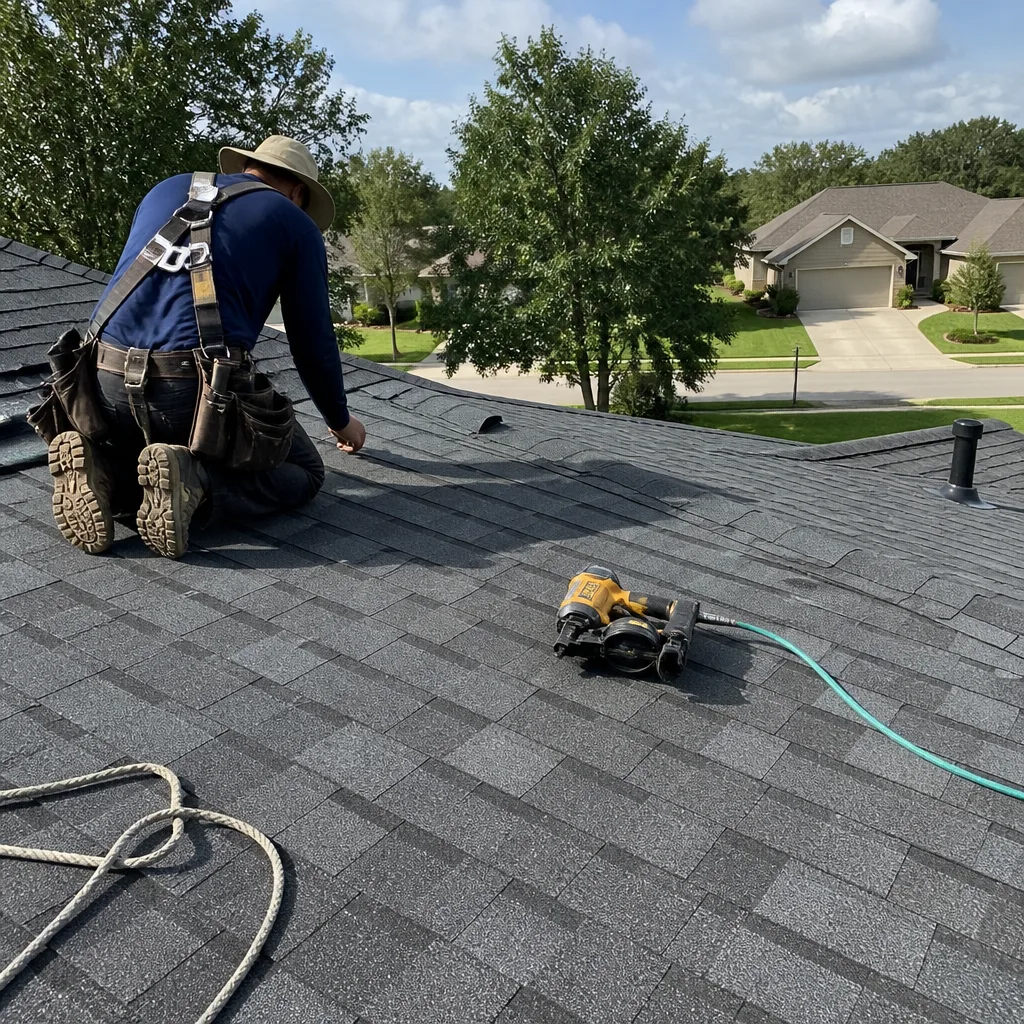 After
AfterWhen to Call a Professional
Call a professional roofer when you see granule loss in your gutters, curling or cracked shingles, water stains on the ceiling, daylight in the attic, or when your roof is over 15 years old and you want a condition assessment before the next storm season. Call immediately after any wind event that lifts shingles or exposes underlayment, because Orlando’s afternoon thunderstorms will find the gap before you do. Roofing work itself is not a DIY project in Florida: the heat, the pitch, and the fall risk are all real. Our recommendation is always to get an inspection, get the findings in writing, and make a decision without pressure. Mercer Roofing Co Orlando offers free estimates across the Orlando area. Call (850) 757-3564 and a live person will answer, any time of day.
Frequently Asked Questions
A full roof replacement in Orlando typically runs between $9,000 and $18,000 for an average single-family home with architectural shingles, depending on square footage, pitch, decking condition, and material brand. Repair work is far less: a standard repair runs $350 to $900, while a more involved repair with decking replacement can reach $1,500 or more. For an exact quote on your roof, call (850) 757-3564 for a free written estimate.
Most Orlando roof replacements take two to four days for a standard single-family home, assuming no major decking replacement is needed. Larger homes, steep rooflines, or extensive rotten decking can add one to three days. Orlando’s afternoon thunderstorms in summer can also cause delays, since roofing crews have to stop work during active lightning and rain. For planning purposes, expect the full process from contract to completion to take one to two weeks. Call (850) 757-3564 to get a more specific timeline for your home.
Yes, most roof leaks can be temporarily sealed or repaired the same day the issue is identified, depending on weather and crew availability. Permanent repairs may require a second visit if the leak is tied to a larger issue like flashing failure or decking rot. In Orlando, where thunderstorms can dump two inches of rain in an hour, a temporary tarp or seal is often the right first step, followed by a permanent repair once the area is dry. Mercer Roofing Co Orlando makes repairs the same day in most cases and includes a written guarantee on every repair. Call (850) 757-3564 to talk through what you’re seeing.
Yes, if the roof damage is caused by a covered peril like wind, hail, or falling debris, your homeowners insurance policy typically covers a roof replacement, minus your deductible. The age and condition of the roof affect the payout: many Orlando homeowners see “actual cash value” coverage on roofs over 15 years old, which means depreciation is deducted. Some policies require an annual roof inspection or decline coverage on roofs over 20 years. Call (850) 757-3564 if you need help understanding what your insurance adjuster is telling you.
A Certified Roofing Contractor holds a state-wide license and can work anywhere in Florida. A Registered Roofing Contractor holds a license that’s typically limited to a specific county or jurisdiction. Both are legitimate, provided the license is Active and the registration covers the area where your home is located. When you look up a license on the DBPR website, check both the license type and the geographic scope. Call (850) 757-3564 if you want help verifying a contractor’s license, even if it’s not us.
Say no politely, close the door, and run the verification process in this guide before making any decision. A post-storm door knock is the most common introduction point for unlicensed chasers in Orlando. A legitimate company doesn’t need to solicit door-to-door; the demand finds them. If you’re concerned about your roof’s condition after a storm, call a company you’ve vetted and ask for an inspection. (850) 757-3564 is our line; a real person answers, and we can schedule an inspection at your convenience, not by knocking on your door.
The Bottom Line
Hiring a roofing contractor in Orlando is not about finding the lowest price or the fastest crew. It’s about running a short verification process that eliminates the people who make the industry seem untrustworthy. Check the DBPR license. Verify the insurance with the carrier, not the contractor. Demand a written line-item estimate. Cap your deposit at 30%. Ask for the technician’s name and photo before the visit. Five steps, less than an hour of your time, and you’ll know more than most roofing customers ever do. If you’re in the Orlando area and want to work with a company that already does all of this, start with our Mercer Roofing Co Orlando home page, or call (850) 757-3564 for a free estimate. Whether you need Roof Repair in Orlando, a full Roof Installation in Orlando, or want to learn more about what sets our Roofing Company in Orlando apart, a real person answers the phone and the price is in writing before any work begins.
Written by Grant Whitlock, Owner at Mercer Roofing Co Orlando, serving Orlando since 2000.